Have you ever felt like something was off with your body, but you couldn't quite put your finger on what it was? Maybe you're struggling with bloating, fatigue, uncomfortable joints, or weight that won't budge. You've tried changing your diet, following wellness trends, or even visiting different practitioners, but you still don't feel your best.
If you've heard about Wellness Scans, you're probably wondering what they can actually tell you. Can they identify nutritional deficiencies? What about digestive problems, hormones, or toxins? And how do you make sense of a report that contains more than 100 pages of information?
I offer Quantum Resonance Biofeedback Wellness Scans at my private gym in Castle Rock, Colorado. The scanner generates a report covering approximately 45 wellness categories, but understanding what those categories represent — and what the technology cannot reliably determine — is essential. Let me show you what's included, how I help clients navigate the results, and why I believe the most useful outcome is a practical conversation about your health habits and goals.
What Can a Wellness Scan Actually Detect?
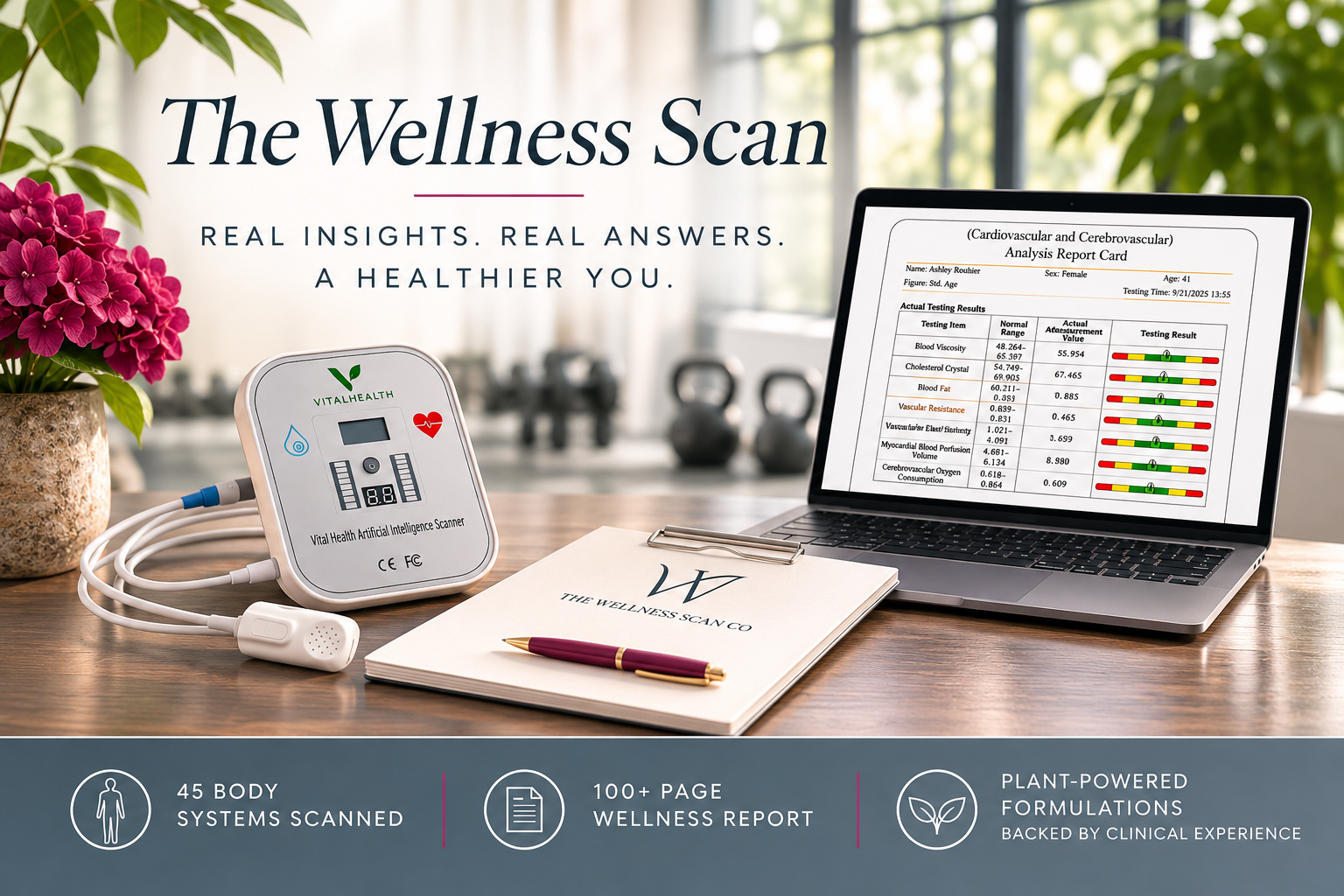
The Wellness Scan I offer uses a finger sensor connected to computer software to generate a report organized into approximately 45 wellness categories.
These categories cover a wide range of topics, from digestion and nutrition to circulation, hormones, and other body systems.
The software assigns indicators to each category and displays them in an easy-to-read report.
But there's an important distinction I want you to understand.
The scanner reports wellness indicators; it does not provide medically validated measurements of the conditions named in those categories.
For example, the report may contain a section labeled Minerals, but that doesn't mean the device has measured your actual blood or tissue mineral levels.
Likewise, a category labeled Heavy Metals doesn't establish that you have been exposed to a particular metal or have toxic levels in your body.
Quantum resonance biofeedback scanners have not been clinically established as reliable tools for diagnosing diseases, identifying nutrient deficiencies, measuring toxins, or confirming organ dysfunction.
So what do I use the report for?
I use it as a starting point for discussing nutrition, lifestyle, and the concerns that brought someone to see me.
And because the report is so extensive, I help clients focus on a few manageable areas rather than trying to address everything at once.
What Are the 45 Wellness Areas Included in the Report?
The report covers approximately 45 categories, and many of them are grouped around familiar health and wellness topics.
Some of the categories I most often discuss with clients include:
Gastrointestinal function
Large intestine function
Liver and kidney wellness
Vitamins and minerals
Essential fatty acids
Circulation and cardiovascular wellness
Hormonal wellness
Immune system indicators
Environmental stressors
Toxins and heavy metals
Amino acids
Skin, eye, and bone wellness
Food-related indicators
Body composition and lifestyle recommendations
Those aren't all 45 categories, but they give you an idea of the report's scope.
The software presents its findings as color-coded scores and suggested areas of concern.
I generally begin by showing clients the digestive, liver, kidney, and nutritional sections because those are areas that naturally lead to useful conversations about eating habits, hydration, and overall wellness.
Let's look at several of the categories people ask about most often.
Can a Wellness Scan Identify Digestive Problems or Food Sensitivities?
Digestive concerns are among the most common reasons people become interested in Wellness Scans.
Some clients tell me they're dealing with bloating, gas, discomfort after eating, or the feeling that certain foods just don't agree with them.
The scanner's report includes sections labeled Gastrointestinal Function and Large Intestine Function.
It may also display indicators associated with particular foods.
What the Digestive Report Cards Show
The software organizes these readings into numerical scores and color-coded categories.
When we're reviewing the report, I can show you which areas the software has flagged and explain how its scoring system works.
However, these readings cannot establish that you have a digestive disorder, intestinal inflammation, leaky gut, or a particular food sensitivity.
Food allergies, celiac disease, and other gastrointestinal conditions require appropriate medical evaluation.
And if you have persistent digestive symptoms, it's important to investigate those with a qualified healthcare professional rather than relying on a wellness scanner.
Why This Category Is Personally Important to Me
About 14 years ago, I was struggling with significant digestive discomfort.
I experienced bloating and gas almost every day. By evening, my stomach sometimes looked like I was seven months pregnant!
I also had frustrating energy crashes.
My doctor checked my thyroid, blood sugar, and other bloodwork, but the results came back normal.
I was relieved, of course, but I still didn't understand why I felt so uncomfortable.
A friend introduced me to a practitioner who offered a wellness scan similar to the one I use today.
The practitioner suggested that I experiment with removing gluten, dairy, peanuts, and cashews from my diet.
Within about a week of changing my eating habits, my digestive symptoms had improved dramatically.
I was amazed!
I can't say that the scanner accurately identified food sensitivities or that it diagnosed the cause of my symptoms. I also changed several foods at once, so I can't know which change made the difference.
But that experience encouraged me to pay much closer attention to nutrition and how different foods affected the way I felt.
It also sparked my interest in offering Wellness Scans myself.
Can a Wellness Scan Measure Liver, Kidney, or Detoxification Function?
Another group of report cards I frequently show clients includes categories labeled Liver, Kidneys, and related wellness indicators.
These sections often generate a lot of questions.
The liver and kidneys perform essential functions in the body, including processing and eliminating waste products.
And supporting normal health through adequate nutrition, hydration, physical activity, and appropriate medical care is certainly worthwhile.
But there's an important limitation.
A wellness scanner cannot reliably determine whether your liver or kidneys are functioning properly or whether your body needs a detoxification treatment.
Those questions require established medical assessments when there's a clinical reason for concern.
Why I Like to Begin With Foundational Wellness Habits
When clients are feeling overwhelmed, I prefer to start with the basics.
We talk about the quality of their food, how much water they're drinking, their activity level, sleep, and other daily habits.
I often describe this as getting the foundations in place before trying to tackle everything else.
In my experience, people are more likely to follow through when we identify a few practical changes instead of giving them an enormous list of things to do.
That might mean improving meal consistency, increasing vegetable intake, or creating a more sustainable exercise routine.
It doesn't mean a scan has demonstrated that toxins are accumulating in their organs.
And I don't want clients to feel that they need an aggressive cleanse or detox program because a report has flagged a particular category.
Can a Wellness Scan Detect Vitamin or Mineral Deficiencies?
The Wellness Scan report includes sections for vitamins, minerals, essential fatty acids, and amino acids.
These are among the categories clients are most curious about.
After all, nutrition plays an important role in energy, recovery, exercise performance, and general health.
The software may flag certain nutrients as outside its preferred range.
But those indicators aren't equivalent to laboratory measurements.
For example, a flagged vitamin D or iron-related indicator wouldn't confirm a deficiency.
If we suspect a clinically significant deficiency, I would recommend discussing appropriate testing with your healthcare provider.
How I Use These Sections in a Nutrition Conversation
This is where my background in nutrition and fitness comes into play.
Rather than treating the scanner's numbers as confirmed deficiencies, I'll ask about your eating habits.
Are you getting enough protein?
Are you eating a variety of vegetables, fruits, and other nutrient-rich foods?
Are you following a very restrictive diet?
Are you fueling your workouts appropriately?
I draw on my experience with bodybuilding and figure-competition nutrition, along with a low-glycemic, Mediterranean-style approach to eating.
My goal is to help clients create a balanced eating plan that supports their goals without making food unnecessarily complicated.
Depending on the situation, we may also discuss supplements, but they're optional and should be chosen based on individual needs and appropriate professional guidance—not solely on scanner readings.
What About Hormones, Heavy Metals, and Environmental Stressors?
These are three more categories that tend to attract attention.
The scanner's software includes indicators labeled for hormonal wellness, heavy metals, and environmental stressors.
It's understandable why someone would be interested in those topics, especially if they've been struggling with fatigue, weight changes, or other unexplained symptoms.
However, the scanner hasn't been validated as a way to measure hormone levels, detect heavy metal exposure, or identify environmental toxins.
Hormonal conditions may require a medical history, examination, and specific laboratory testing.
Likewise, concerns about lead, mercury, or other heavy metals should be evaluated using established testing methods appropriate to the suspected exposure.
A flagged scanner category isn't evidence of poisoning or toxicity.
I want clients to understand what the report says without becoming frightened by results that haven't been medically confirmed.
What Do the Red, Yellow, Blue, and Green Scores Mean?
One thing clients appreciate about the Wellness Scan report is its visual presentation.
Instead of pages filled entirely with technical language, the software organizes its results into report cards with numerical values and colors.
You'll see red, yellow, blue, and green indicators.
Green represents the scanner software's preferred reference range.
Other colors indicate that a reading falls outside that proprietary range.
Does Green Mean You're Healthy?
Not necessarily.
A green indicator means that the scanner's software has classified that particular reading within its preferred range.
It doesn't establish that the associated organ or body system is healthy.
Likewise, a red indicator doesn't mean you have a disease or deficiency.
These are proprietary scores, not clinically validated diagnostic findings.
What If Your Scores Change During a Follow-Up Scan?
Some clients enjoy comparing their original report with a later scan.
They find it motivating to see how the software's indicators have changed while they've been working on their nutrition and wellness habits.
I understand that!
But movement toward the scanner's green range isn't independent evidence that organ function, toxin levels, or nutritional status have improved.
That's why I also want to know how you're feeling, what changes you've made, and whether you're making progress toward meaningful goals.
How Do I Turn a 120-Page Wellness Report Into Three Priorities?
This is probably the part of the appointment I enjoy most.
The scanner generates a report of approximately 100–120 pages.
That's a lot of information!
And I don't believe anyone should leave an appointment feeling that they need to make 45 different changes to their life.
Instead, I typically review five or six categories with clients.
Then I use a Body Systems AI program that organizes the scanner's findings and suggests three areas of focus.
The AI doesn't independently verify the scanner's readings. It's simply a tool for organizing the report.
From there, I combine that information with what you've told me about your symptoms, goals, eating habits, and lifestyle.
What Might Your Three Priorities Look Like?
They'll depend on your individual circumstances.
For one person, we might focus on improving meal quality, creating a consistent sleep schedule, and increasing daily movement.
For someone else, the priorities might involve eating enough protein, developing a realistic exercise routine, and discussing persistent symptoms with a healthcare professional.
I want you to leave knowing what you can actually do—not feeling that you need to understand every number in the report.
After the appointment, I'll email your full report along with a summary of the areas we discussed and your personalized recommendations.
What Have My Clients Experienced After Their Wellness Scans?
I love hearing from clients who begin making changes and notice that they're feeling better.
And two experiences in particular stand out.
Client Story: Finally Making Progress With Weight Loss
One woman came to me after her doctor recommended Resting Metabolic Rate testing.
She'd been struggling to lose weight despite trying different approaches. In fact, she felt as though she kept gaining weight.
After discussing her concerns, we decided to begin with a Wellness Scan and a broader conversation about her habits.
The report flagged several categories related to digestion and other body systems.
We focused on improving her eating habits and discussed an optional supplement routine.
Over the next three months, she reported that she was sleeping better, feeling better overall, and had finally lost five pounds.
She also noticed changes in her measurements—including an inch around her arms!
She was thrilled to be seeing progress.
She continued returning for follow-up appointments and reported that she was feeling great.
Her scanner scores changed over time, too, although those changes don't establish that her organs or detoxification pathways improved.
Because she made several lifestyle changes, we also can't determine which change was responsible for her results.
But I was delighted to see her feeling encouraged and making progress toward her goals.
Client Story: Less Discomfort and Six Pounds Lost
Another client came to me because she was struggling with bloating, digestive discomfort, and achy joints.
She described feeling inflamed and uncomfortable.
Her Wellness Scan report flagged categories associated with digestion, the large intestine, liver, kidneys, and circulation.
We talked through her habits and developed a plan that included dietary changes and optional supplements.
Within about a month, she reported feeling much better and had lost six pounds.
Again, the scan couldn't establish the cause of her symptoms, and her improvement doesn't prove that the scanner accurately identified a physiological problem.
But her experience is an example of how a wellness appointment can encourage someone to make practical changes and pay closer attention to how they feel.
For me, that's always rewarding.
How Accurate Are Quantum Resonance Biofeedback Wellness Scans?
This is an important question, and I think anyone considering a Wellness Scan deserves a straightforward answer.
Quantum resonance biofeedback scanners are marketed as devices that evaluate wellness through the body's energetic signals.
However, there isn't reliable independent clinical evidence establishing that these devices can accurately identify the many medical conditions, nutrient levels, or organ functions described in their reports.
You may encounter accuracy percentages in promotional materials, but without appropriate independent validation, those figures shouldn't be treated as established medical accuracy.
How Is This Different From Bloodwork or Medical Imaging?
Blood tests can measure specific biological substances using established laboratory methods.
Medical imaging, such as ultrasound, MRI, or CT scans, produces images or measurements of structures inside the body.
A Quantum Resonance Biofeedback Wellness Scan does neither.
It generates software-based wellness indicators from a finger-sensor reading.
That's why I don't present it as a replacement for bloodwork, medical imaging, an annual physical, or other appropriate healthcare.
If you're concerned about a particular health condition, it's important to work with a qualified medical professional.
Is a Wellness Scan Right for You?
The people who are most interested in my Wellness Scans are often those who feel stuck.
They've tried different diets, exercise routines, supplements, or wellness trends, but they're still searching for an approach they can maintain.
Some are concerned about bloating or low energy.
Others want help reviewing their nutrition and lifestyle habits.
And some are simply curious about the experience.
If that sounds familiar, a wellness consultation may be an opportunity to discuss your goals and identify practical changes.
However, I wouldn't recommend relying on a Wellness Scan to investigate unexplained or persistent symptoms.
If you're experiencing ongoing digestive problems, unusual fatigue, headaches, joint pain, or unexplained weight changes, please seek appropriate medical evaluation.
A wellness scan can't rule out underlying health conditions, even when previous medical tests have been normal.
What Should You Ask Before Booking?
I encourage you to ask questions!
Some useful ones include:
What exactly does the device measure?
Are the results medically validated?
How will you help me interpret the report?
Will I receive practical nutrition and lifestyle recommendations?
Are supplements required?
What happens if I'm concerned about a possible medical condition?
I want you to feel comfortable understanding both what the service includes and its limitations.
How Much Does a Wellness Scan Cost in Castle Rock, Colorado?
I offer Wellness Scans for $75 at my private gym in Castle Rock.
When I first tried a wellness scan approximately 14 years ago, my appointment cost $300.
One of my goals in offering this service was to make the experience more accessible.
Your $75 appointment includes:
A simple, noninvasive scan using a finger sensor
An approximately 30-minute appointment
A report covering around 45 wellness categories
A guided review of the report's main sections
An AI-assisted summary of three suggested focus areas
Personalized nutrition and lifestyle recommendations
Your report and recommendations emailed to you afterward
If you choose an optional supplement program, I also offer a complimentary follow-up scan approximately four weeks later.
That gives us another opportunity to discuss how you're feeling and whether your wellness plan is working for you.
Why Work With Me for Your Wellness Goals?
I've been helping people improve their nutrition, fitness, and overall wellness since 2001.
Over the years, I've worked with thousands of clients and performed more than 6,000 metabolic tests.
I've also experienced my own struggles with digestive discomfort, weight management, and trying to figure out what works for my body.
I know how frustrating it can feel when you've tried so many things and still don't feel your best.
My approach is to listen, explain information clearly, and help you identify realistic changes.
I combine my experience in personal training and nutrition with a practical, sustainable approach to healthy living.
And I don't believe every client needs the same assessment.
For example, if your primary goal is understanding your calorie needs, Resting Metabolism Testing provides a direct physiological measurement that can help guide your nutrition plan.
If you're looking for a structured program combining nutrition, exercise, mindset, and accountability, you may be more interested in my 12-Week Transformation Program.
My goal is to help you find the most appropriate next step—not simply to sell you another test.
Ready to Learn More About Wellness Scans?
If you've been curious about Wellness Scans, I hope this article has helped you understand what the report includes and what the technology can—and cannot—tell you.
The scanner generates a wide range of wellness indicators, but the most meaningful part of our appointment is the opportunity to discuss your goals, nutrition, and lifestyle.
I'll help you navigate the report, answer your questions, and develop a manageable plan for moving forward.
I offer Wellness Scans by appointment at:
W8 4IT Gym
20 Wilcox St, Suite 111-B
Castle Rock, CO 80104
I welcome clients from Castle Rock, Parker, Highlands Ranch, Denver, and surrounding Colorado communities.
Learn More About My Wellness Scan Service
And if you'd like to know exactly what happens during an appointment, read my companion article, What Should I Expect During My First Wellness Scan?
I'd love to help you explore your wellness goals and find practical steps toward feeling your best.